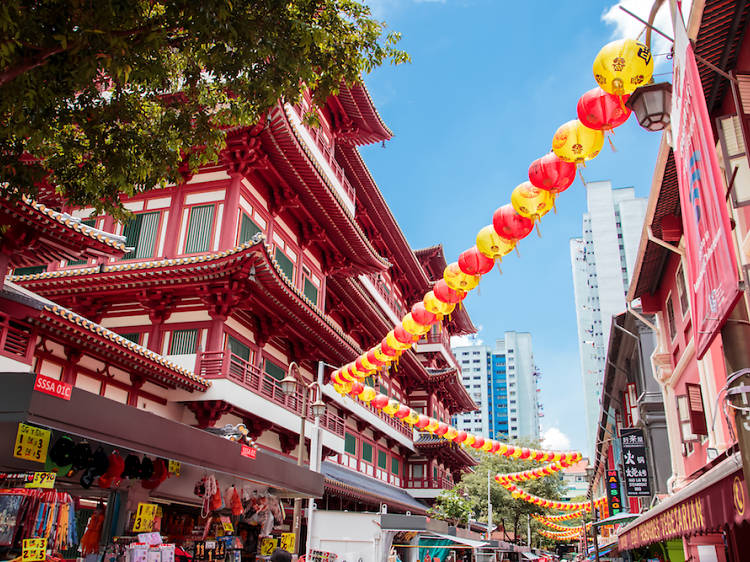
The story of Chinatown and early Chinese settlers
The story of Singapore’s early Chinese settlers is one of courage, hardship, and community-building. Their arrival and settlement patterns shaped the cultural landscape we still see today — especially in Chinatown and the Singapore River area.
Who Were the Early Chinese Settlers?
Historical records show that most early Chinese migrants came from the southern provinces of Fujian and Guangdong, arriving in large numbers from the late 18th century and especially after 1819.
They belonged mainly to these dialect groups:
- Hokkien (Hoklo) – the largest group, mostly traders and labourers
- Teochew – many were boatmen, farmers, and merchants
- Cantonese – skilled craftsmen, carpenters, metalworkers
- Hakka – miners, farmers, and later shopkeepers
- Hainanese – cooks, sailors, and service workers
Many arrived as coolies (unskilled labourers), while others were traders, craftsmen, or middlemen. By 1827, the Chinese had already become the largest ethnic group in Singapore.
Where Were They Assigned to Settle? – The 1822 Raffles Town Plan
When Sir Stamford Raffles returned to Singapore in 1822, he introduced a formal town plan to organise the fast-growing settlement. One of the key features was ethnic zoning to maintain order and reduce conflict.
Chinese Settlement Zone – “Chinese Kampong” (Chinatown)
The plan allocated the entire area west of the Singapore River for the Chinese community. This area became known as the Chinese Kampong, the foundation of today’s Chinatown.
How the Chinese Areas Were Divided Internally
Raffles allocated the entire area west of the Singapore River for the Chinese community.
This area became known as the Chinese Campong, the foundation of today’s Chinatown.
How the Chinese Areas Were Divided Internally
Within Chinatown, different dialect groups settled in their own clusters:
- Hokkiens → Telok Ayer Street, Hokkien Street
- Cantonese → Temple Street
- Teochews → South Canal Road, Carpenter Street, Garden Street
Each street developed its own identity based on the trades practiced there — from food stalls to goldsmiths, opera houses, clan associations, and even funeral shops.
Why They Were Assigned There
Raffles believed the Chinese would form the majority of future town dwellers, so he gave them a large, central area close to the Singapore River — the heart of trade.
The location made sense because:
- It was near the river, where goods were unloaded
- It allowed Chinese traders to live close to their workplaces
- It kept dialect groups together for mutual support
- It helped the British maintain order by grouping communities
How This Shaped Singapore Today
The early zoning created the cultural districts we still recognize:
- Chinatown (Chinese)
- Kampong Glam (Malay & Arab)
- Little India (Indian)
- Civic District (European administrative zone)
The Chinese Kampong grew into a vibrant, self-contained town — full of shophouses, clan associations, temples, markets, and trades — forming the backbone of Singapore’s early economy.
Location
Chinatown district centred on Pagoda Street, Telok Ayer, South Canal Road and the Singapore River.
Plan a Visit
Join one of our guided heritage walks to learn more about Chinatown's history and heritage. Private group bookings available.
Contact / Book a Visit