A Glimpse into History
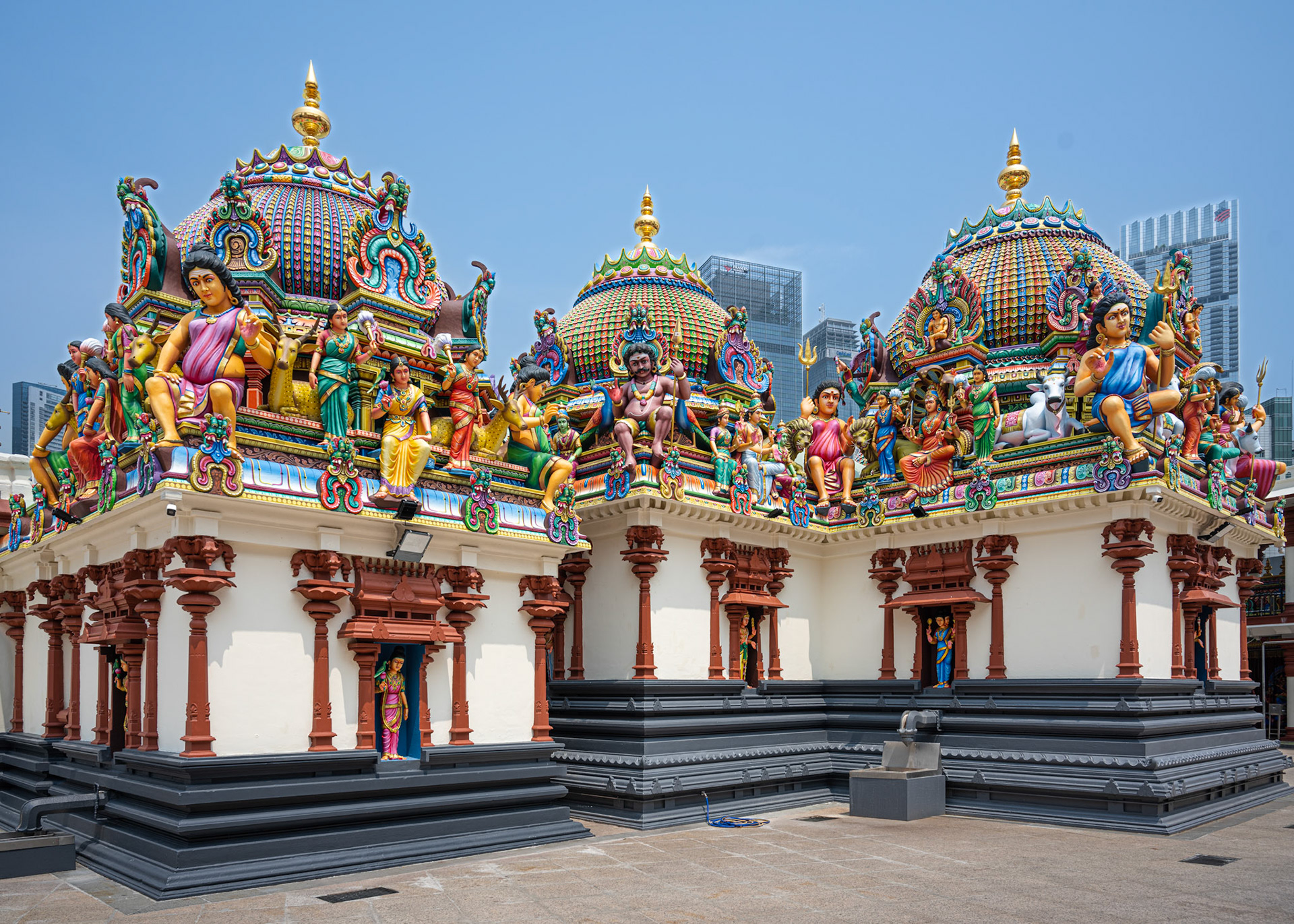
Sri Mariamman Temple, founded in 1827 by Indian pioneer Naraina Pillai, stands as the oldest Hindu temple in Singapore. Built originally as a simple wood and attap shrine, it was later reconstructed in brick in 1843, with much of the present structure dating back to the 1860s.
Pillai, who arrived with Sir Stamford Raffles, established the temple to serve the growing South Indian Hindu community. The British initially allocated land elsewhere, but due to the lack of fresh water for rituals, the temple eventually found its permanent home on South Bridge Road, right in the heart of Chinatown.
Significance and Cultural Role
Dedicated to Goddess Mariamman, revered for her power to cure illnesses and protect communities, the temple has long been a spiritual anchor for early Indian immigrants. Beyond worship, it once served as a refuge for new arrivals, a venue for community dispute resolution, and even an early registry of Hindu marriages.
Today, its striking Dravidian-style gopuram — adorned with colourful sculptures of deities — is a landmark of Chinatown. The temple is also a gazetted National Monument, reflecting its deep historical and architectural importance to Singapore.
Why Visitors Love It
Tourists are often captivated by:
- The vibrant, intricately carved entrance tower
- The serene inner sanctums dedicated to Mariamman
- The blend of Indian heritage within a Chinese-majority district
- Its role in major Hindu festivals such as Timiti (fire-walking)
Why You Should Visit Sri Mariamman Temple in Singapore
A compelling, culturally rooted explanation you can share with your guests — something that resonates with pride, heritage, and identity.
-
A Piece of India in the Heart of Chinatown
Sri Mariamman Temple is Singapore’s oldest Hindu temple, built in 1827 by early Indian migrants. For Indian visitors, stepping inside feels like discovering a familiar spiritual home in a completely unexpected neighbourhood — right in the middle of Chinatown. It’s a reminder of how far the Indian community has travelled, and how deeply they’ve shaped Singapore’s history.
-
A Living Story of the Indian Diaspora
This temple tells the story of the first South Indian settlers who arrived here nearly 200 years ago. Tourists often find it meaningful to see how:
- Tamil traditions were preserved abroad
- Hindu rituals adapted to a new land
- A community built a sanctuary that still thrives today
- It’s not just a temple — it’s a chapter of Indian heritage outside India.
-
Stunning Dravidian Architecture
The colourful gopuram, packed with intricate sculptures of deities, guardians, and mythological figures, is one of the most photographed landmarks in Singapore. For many visitors, it’s fascinating to see how traditional South Indian temple architecture was recreated with local craftsmanship and materials.
-
Home to Unique Rituals and Festivals
Sri Mariamman Temple is famous for the Timiti (fire-walking) festival, a tradition that continues with great devotion. Even outside festival periods, the temple’s daily pujas, music, and atmosphere offer a serene and authentic experience.
-
A Cultural Bridge Between India and Singapore
Visiting the temple helps Indian tourists understand how Hindu culture blends into Singapore’s multicultural landscape. It’s a powerful example of:
- Harmony between communities
- Preservation of identity
- Respect for diverse traditions
-
A Must-See Landmark for Any Heritage Lover
Whether they’re spiritual, curious about history, or simply love architecture, Indian tourists find the temple a meaningful stop — one that connects them emotionally to the Indian story in Southeast Asia.
Location
South Bridge Road, within walking distance of Chinatown MRT (NE4/DT19) and Clarke Quay.
Plan a Visit
Join one of our guided heritage walks to learn more about the temple's history and rituals. Private group bookings available.
Contact / Book a Visit