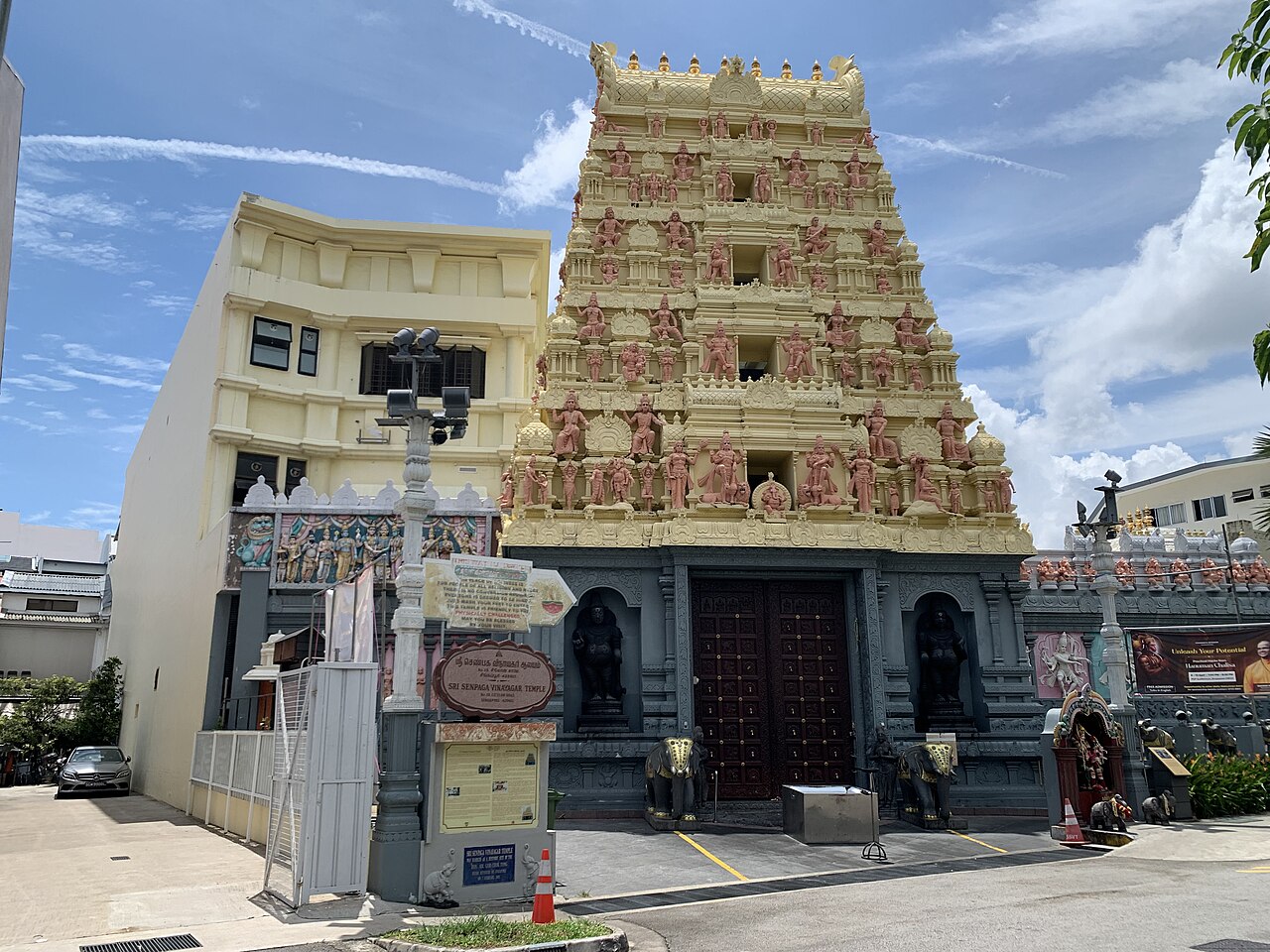
History
Sri Senpaga Vinayagar Temple has roots going back to the 1850s, when a statue of Lord Vinayagar (Ganesha) was discovered beside a pond along Ceylon Road. A chempaka (senpaga) tree stood nearby, giving the temple its name.
Early Ceylon Tamil migrants built a simple attap-roof shelter to house the deity, led by community pioneer Ethirnayagam Pillai. Over time, as the Ceylon Tamil community grew, the temple expanded, and by 1923, the Singapore Ceylon Tamils’ Association officially took charge of its development.
The temple underwent several consecration ceremonies — including major restorations after WWII bomb damage — and continued to grow with new shrines, halls, and cultural facilities added over the decades.
Significance
Sri Senpaga Vinayagar Temple is one of Singapore’s most important Ganesha temples, deeply connected to the heritage of the Ceylon Tamil community.
Key points of significance:
- Ganesha, the remover of obstacles, is the presiding deity — making the temple a popular place for blessings before new ventures.
- The temple houses additional shrines for Shiva, Ambal, Subramaniam, Vairavar, and Nageswarar, reflecting a rich spiritual ecosystem.
- It is recognised as a historic site, reflecting its long-standing cultural and architectural importance in Singapore.
Why Tourists Should Visit
-
A Deep Cultural Story
The temple beautifully showcases how early Ceylonese migrants preserved their faith and identity while building a new life in Singapore.
-
Unique Origin Story
Few temples begin with a deity discovered beside a pond under a sacred tree — this origin gives the temple a mystical charm that fascinates visitors.
-
Beautiful Dravidian Architecture
The colourful gopuram, detailed sculptures, and serene inner sanctums offer a visually rich experience perfect for photography and cultural appreciation.
-
A Living Heritage Site
With its wedding hall, classrooms, library, and cultural spaces, the temple remains an active centre of community life — not just a historical monument.
-
Strong Heritage of the Ceylon Tamil Community
The temple is deeply tied to the Ceylon Tamil community, who played a major role in Singapore’s early development. It remains one of the most important cultural and religious centres for this community, making it a meaningful stop for anyone interested in diaspora history.
-
One of the Most Prominent Ganesha Temples in Singapore
While many temples honour Ganesha, Sri Senpaga Vinayagar Temple is one of the largest and most architecturally elaborate Ganesha temples in the country. Its gopuram, sculptures, and shrines reflect a high level of craftsmanship inspired by South Indian temple architecture.
-
Rebuilt After WWII Bombing — A Story of Resilience
The temple was damaged during Japanese air raids in World War II. Instead of abandoning it, the community rebuilt and expanded it — a powerful symbol of resilience and devotion.
-
A Rare Major Temple in the East
Most historic Hindu temples in Singapore are located in Little India or Chinatown. Sri Senpaga Vinayagar Temple stands out as one of the few major Hindu temples in the eastern region, making it a unique spiritual landmark for visitors exploring Katong, Joo Chiat, and the East Coast.
Location
Ceylon Road / Katong — within walking distance of local heritage sites and public transport.
Plan a Visit
Join one of our guided heritage walks to learn more about the temple's history and rituals. Private group bookings available.
Contact / Book a Visit